
Can P Platers Use CarPlay? Rules by State
You're eating a burrito while shifting gears, yelling into a CB radio, fiddling with the FM dial, juggling your keys, and adjusting the rear-view mirror, all at the same time. None of that breaks the law, as long as you're not breaking any other road rule, not crashing, and not drifting out of your lane.
But if your phone is connected and running a route you set before you left? In several states, that crosses the line.
If your first reaction to learner and P-plate phone rules is "seriously?", you're not alone. At first glance, it does feel extreme. But there's a reason behind it: according to Western Australia's Road Safety Commission, if you glance away from the road for just two seconds at 60km/h, you're effectively driving blindfolded for 33 metres. At 100km/h, that's 55 metres. For drivers who are still building experience behind the wheel, that gap matters even more.

Can P-Platers Use CarPlay?
Quick Answer by State
| State | On L / P1 | On P2 (or 25+) |
|---|---|---|
| NSW | No — total phone ban | No — same ban applies |
| QLD | No, under 25 | Yes — mounted, hands-free nav only |
| VIC | Yes — connected, limited interaction | Yes — same rule |
| SA | No, except mounted GPS-only | Yes — hands-free incl. CarPlay |
| WA | Yes — mounted, route preset | Yes — same rule |
| TAS | No — total ban | No — same ban applies |
3 Steps to Check You're Compliant
- Find your state and licence stage in the table above, or in the full breakdown further down this page.
- If CarPlay or Android Auto is allowed for your stage, mount your phone in a fixed holder and set your route and music before you start driving, not once you're moving.
- If it's not allowed yet on your plates, use a dedicated GPS unit instead, or wait until you reach the stage where connected navigation is permitted.
Already off your P-plates, or driving in a state that allows connected use? A wireless CarPlay & Android Auto adapter is the easiest way to add it to almost any car without touching your phone while driving.
How Strict Is the Rule Where You Live?
You've probably heard "P-platers can't use their phone" and assumed it just means no calling or texting. The actual rule is far more specific, and it depends heavily on which state you're in.
New South Wales
This is the strictest rule in the country. Transport for NSW's own guidance is direct on this point.
"Can I use my phone to make a call, use GPS, or listen to music? No. Neither learner nor provisional licence holders are allowed to use their phone at all while driving or riding, whether it's held in the hand, resting against the body, mounted in a cradle, or used hands-free via Bluetooth. None of these are permitted." Transport for NSW
For learner and P-plate drivers, phone cradles, Bluetooth, CarPlay, and Android Auto are all off the table, even though a fully licensed driver can use any of them without a second thought. The rule applies even at a red light or stuck in traffic. Unless the car is fully parked with the engine off, the phone can't be touched, not even to hand it to a passenger. A standard breach is enough to suspend a learner, P1, or even a P2 licence in a single stop.
Queensland
Queensland's rule splits by age and licence stage. If you're a P1 holder under 25, hands-free options including CarPlay and Android Auto are completely banned, the same as NSW, and Queensland's road safety guidance confirms it currently carries the highest base fine in the country.
Once you reach P2, or turn 25 while still on P1, the rules loosen: hands-free functions including navigation apps become allowed, as long as the phone is mounted and you're not looking at it.
Victoria
Victoria sits in the middle. L and P-plate drivers can have their phone connected to CarPlay or Android Auto, but can't scroll, type, use voice control, or touch messages, social media, or video calls while driving.
South Australia
SA bans phone use for learners and P1 drivers, with one specific exception for navigation. Under SA's road rules, a learner or P1 driver can use the GPS function on a mobile phone only if it's secured in a purpose-built mount and never touched while driving, with the destination set before the trip starts.
Any other use, including hands-free calls, isn't allowed. P2 drivers get broader hands-free access, including CarPlay and Android Auto, as long as the phone itself is never glanced at.
Western Australia
WA currently applies one rule to all drivers, regardless of licence stage. Right now, every driver can use a phone as a navigation tool, but only if it's in a vehicle-mounted holder with the route set and started before driving. Touching the phone mid-trip to change the navigation app, even while mounted, breaks the rule.
Worth flagging: in April 2026, the WA Government announced a proposed overhaul of learner and provisional licensing that would introduce a full phone ban for L and P-plate drivers, with an exception for hands-free navigation or audio set up before the trip. It's a proposal, not yet in force, so the one-rule-for-everyone setup described above is what currently applies.
Tasmania
Tasmania has one of the strictest bans in the country. Its graduated licensing rules describe a total ban on mobile phone use for learner and P1 drivers, including hands-free and speaker mode, with no exceptions besides the usual parked-and-stopped allowance.
Every state takes phone use seriously for new drivers. None of them are relaxed about it, they just differ in how strict they are. NSW, SA, and TAS sit at the strict end with close to a total ban. QLD and SA ease up once you reach P2. VIC and WA allow more from the start, but still set firm limits on what you can actually do.

| State | On L / P1 | What's actually allowed | Fine |
|---|---|---|---|
| NSW | Banned outright | Nothing. No holding, no cradle, no Bluetooth, no CarPlay | $423–$562 |
| QLD | Banned under 25; eases on P2 | P2/25+: mounted, hands-free nav only, no touching or looking at it | $1,251 |
| VIC | Connected, limited use | Can connect to CarPlay/Android Auto; no scrolling, typing, or voice control | $555 |
| SA | Banned, one exception | Mounted GPS only, route set before driving, never touched | $556 + levy |
| WA | Allowed, same as full licence | Mounted, route set before driving, no changes mid-trip | $1,000 |
| TAS | Banned outright | Nothing, including hands-free and speaker mode | $410 |
What This Actually Means for You as a New Driver
Wherever you're allowed any phone use at all, the requirement is the same: set your route and your music before you start the car. SA and WA require it outright for their navigation exceptions. VIC, QLD, and the rest treat it as the easiest way to avoid touching the phone once you're moving.
If you're used to keeping your phone within reach while driving, the real fix is making it physically harder to get to, since that removes the temptation rather than relying on willpower alone:
- Sort out your route, playlist, and any calls you're expecting before you start the car, not on the way.
- Let people know you're about to drive and that you'll reply once you've arrived.
- Switch your phone to silent or do-not-disturb so notifications don't tempt you mid-drive.
- Put it somewhere you genuinely can't reach, like a bag on the back seat or in the glovebox, rather than the seat beside you.
Get into that habit, and you're covered no matter which state you're driving in.
So What Navigation Can P-Platers Actually Use?
Transport for NSW's answer is straightforward.
"All drivers can use a GPS device that is not a mobile phone, as long as it's fixed to the vehicle and doesn't obstruct the driver's view of the road." Transport for NSW
The key isn't whether a device has a screen, or whether it runs Waze. The key is whether it's a phone. A standalone navigation unit, properly mounted in the car, isn't a mobile phone, so the L/P plate ban simply doesn't apply to it.
That's exactly why many parents end up buying their kids a dedicated GPS unit. But that comes with its own headaches:
- A decent in-car GPS unit can run AU$200–300 new.
- Second-hand units are cheaper, but the maps are often years out of date.
- Listings advertising "lifetime map updates" often turn out to need a paid update before they actually work.
- Even after all that, traffic updates are slower, and finding a destination isn't nearly as easy as with Google Maps or Waze.
Paying extra for a worse experience is, understandably, frustrating.
A Car Device That Doesn't Need a Phone at All
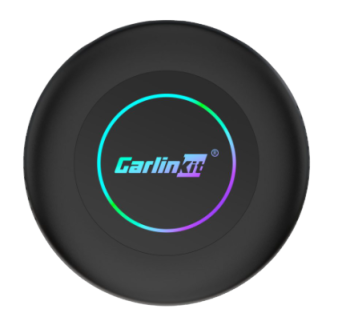
If you're a parent sorting out navigation and entertainment for a newly licensed driver in the family, wherever in Australia you happen to be, this is where the Carlinkit TBox comes in.
It's a standalone Android device with its own SIM card slot. Pop a SIM in, and the car's screen gets its own connection, no phone required at all:
- No phone link needed, with a SIM inserted (5G on the latest models), it goes online by itself.
- Apps install directly from Google Play, including Waze, Google Maps, and Spotify, straight onto the car's screen.
- Plug in to use it, unplug to remove it, the car's original system comes back instantly.
Full specs and current pricing are on the product page.
A Final Note
NSW has the strictest mobile phone rules in the country for learner and P-plate drivers, and every other state has its own variations, some by age, some by licence stage.
This article covers publicly available information current at time of writing, so for your situation, always check the latest guidance from your state's transport authority.
FAQ
Can P-plate drivers use CarPlay in Australia?
It depends on the state and your licence stage. NSW and Tasmania ban all phone use, including CarPlay, for L and P-plate drivers. Victoria and Western Australia allow it with restrictions. Queensland and South Australia ban it for P1 drivers but ease the rules once you reach P2.
Which states let P-platers use CarPlay for navigation?
Victoria and Western Australia allow CarPlay-style navigation for P-plate drivers, and South Australia allows GPS navigation specifically if the phone is mounted and never touched. Queensland allows it once a driver reaches P2 or turns 25.
Can a P1 driver use Apple CarPlay?
In most states, no. NSW, Queensland, South Australia and Tasmania all restrict or ban phone use, including CarPlay, for P1 drivers. Victoria and Western Australia are the exceptions, allowing connected or mounted use with limits.
What happens if a P-plater is caught using CarPlay illegally?
Fines range from around $410 in Tasmania up to $1,251 in Queensland, and a mobile phone offence can suspend a learner, P1 or P2 licence on a single breach in states like NSW.
Can P-platers use a standalone GPS instead of CarPlay?
Yes. A dedicated GPS unit that isn't a mobile phone and is properly mounted isn't covered by the P-plate phone ban in any state, so it remains an option even where CarPlay isn't allowed.