
CarPlay Radio: Do You Really Need a New Head Unit?
If you have been pricing up a CarPlay radio, you have probably had the same moment most Australian drivers have: the head unit costs $700, and then the quote comes back at nearly triple that. One Adelaide workshop publishes it plainly — a mid-range Sony, Kenwood or Pioneer runs about $650–$750, and the job itself another $900–$1,200 before you add a reverse camera.
Before you sign off on that, it is worth knowing there are three ways to get CarPlay onto your dash, not one. Which of them is actually available to you comes down to a single question that almost nobody asks first: what is your car already doing through that USB port?
Short answer: if your car already has factory wired CarPlay, you almost certainly do not need a new head unit. If it does not, keep reading — one of the other two routes is yours.
Answer that question and the decision takes about two minutes. The rest of this guide walks the three routes in the order they actually cost you: what each one is like to live with, what the three add up to side by side, and where the quotes quietly grow.
Start Here: Which of These Three Drivers Are You?
Do this before you read another comparison of double-DIN screens. Every CarPlay radio decision below hangs on the result, and it takes 60 seconds in the driveway.
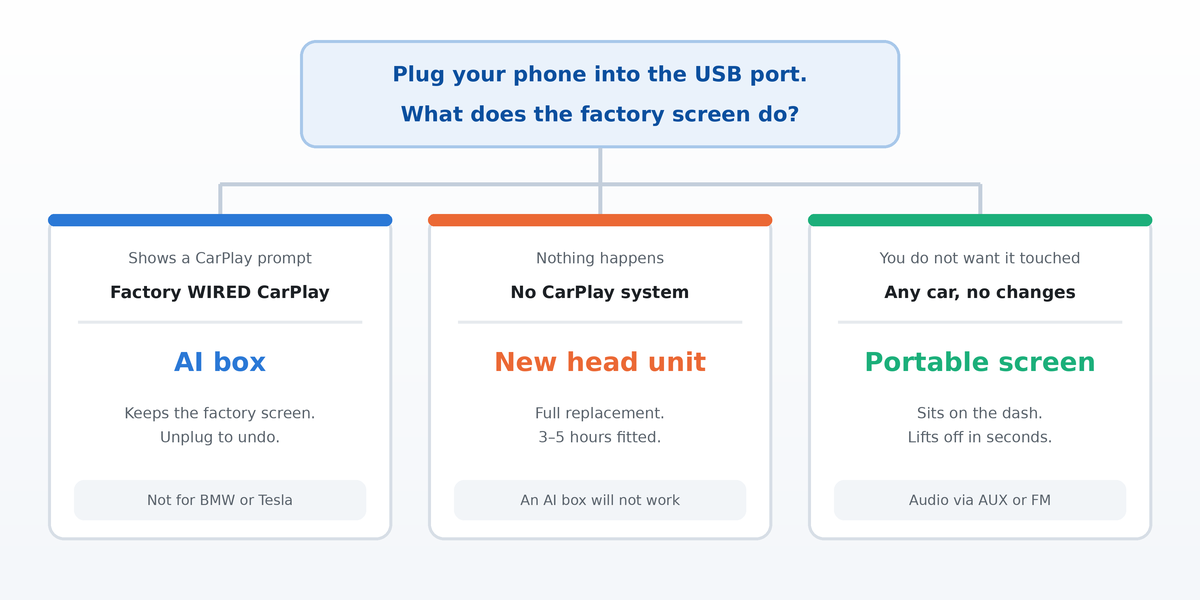
The 60-second check
- Plug your phone into the USB port with a proper data cable, not a cheap charge-only one.
- Watch the factory screen. If a CarPlay icon or prompt appears, your car has factory wired CarPlay.
- If your phone connects wirelessly without ever being plugged in, you have wireless-only CarPlay — a different situation, and an important one.
- If nothing happens at all, your car has no CarPlay system. Cars that never shipped with a CarPlay-capable factory screen fall here.
That result puts you in one of three groups, and the rest of this guide answers each of them separately.
| You are | What your car has | What is actually open to you |
|---|---|---|
| Driver A | Factory wired CarPlay or Android Auto, not a BMW or Tesla | An AI box. Cheapest real upgrade, nothing gets cut or unplugged. |
| Driver B | No CarPlay at all | A new head unit, or a portable screen. An AI box will not work for you. |
| Driver C | Anything, but you do not want the dash touched | A portable screen. Comes off in seconds. |
If you are Driver B, the honest answer is that a proper CarPlay head unit may well be worth the money, and what it costs to fit CarPlay to an older car is worth reading first — but read the traps section before you book the install, because that is where the quote grows.
What Each Option Actually Feels Like to Live With
Specs will not tell you how these three feel after a month. This is the part that decides whether you are happy with your CarPlay radio in six months, so it is worth more of your attention than the spec sheets.
Replacing the head unit
You are buying a whole new screen, and a fitting kit to make it look like it belongs. That means a fascia kit for your specific model, a wiring harness, and usually a steering wheel control interface. A straightforward install takes around 3–5 hours in the workshop with a reverse camera in the mix.
What you get is the complete package: a big modern screen, wired and wireless CarPlay depending on the unit, and physical buttons that were designed this decade.
What you give up is the factory look, and sometimes more than that. On many cars the original screen also handles climate readouts, drive mode displays or parking sensor graphics, and those do not always survive the swap.
Customer case (name changed): Dave, who runs a 2013 Corolla in Brisbane, went the full head unit route. His summary afterwards was that he would do it again — but he had not expected the shop to keep the car most of the day, and he had not thought about where the original radio would live afterwards. It is in a box in his garage, which is exactly where it should be.
Adding an AI box
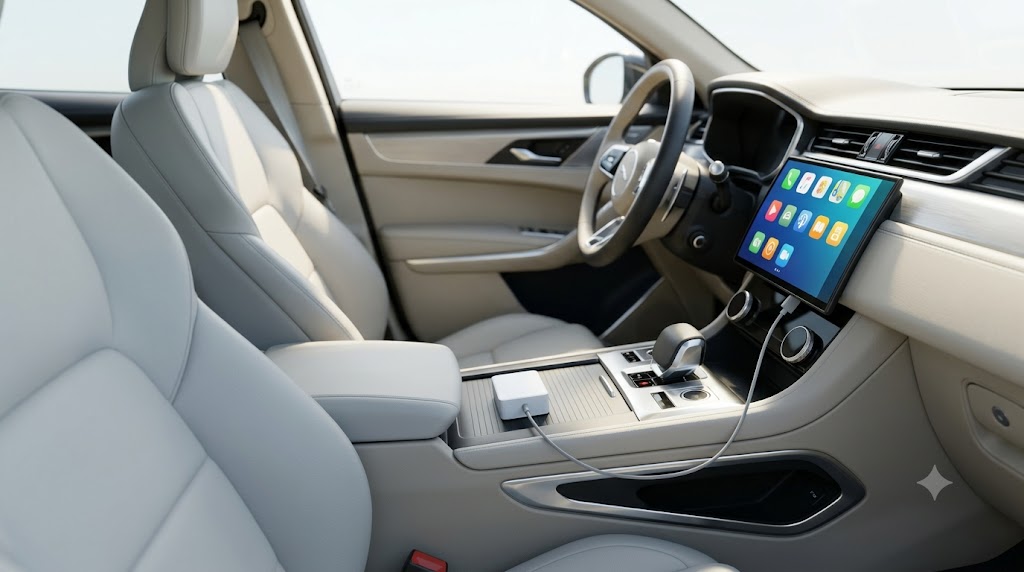
This is the option most people searching for a CarPlay radio have never heard of, and it is the one that changes the maths. An AI box plugs into your existing factory CarPlay port and turns your existing screen into an Android device. Nothing is cut, nothing is unplugged, and the factory interface stays exactly where it was.
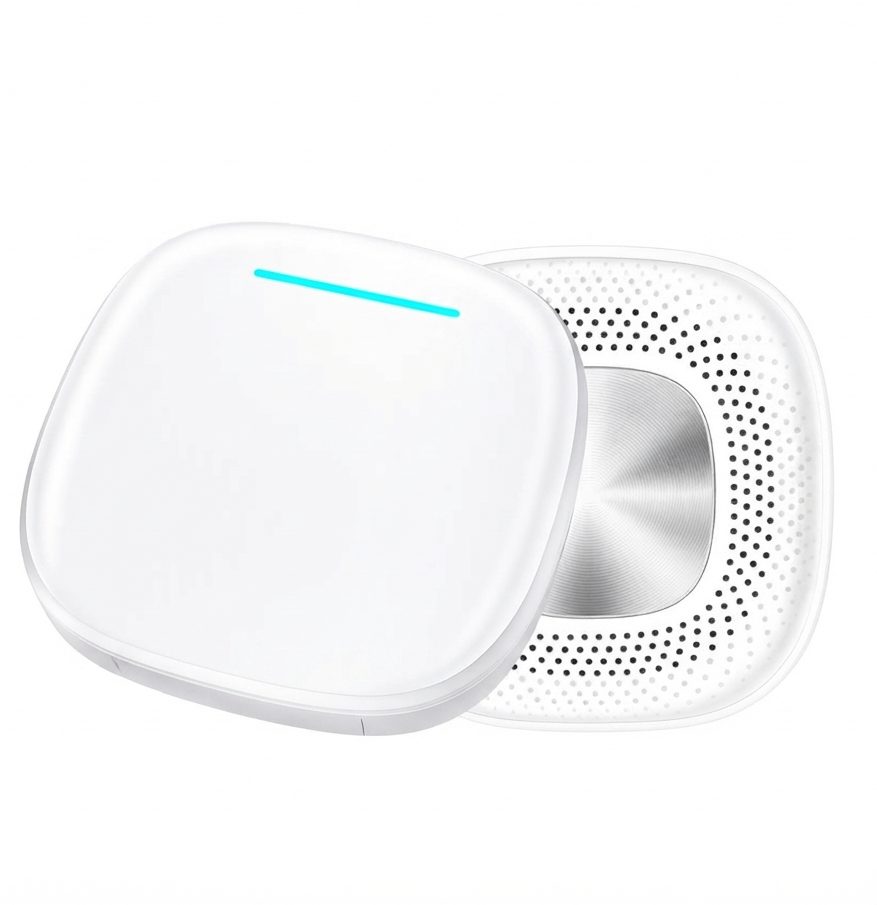
The Max Ultra AI Box is the current example: a Qualcomm QCM6350 eight-core chip, Android 15, 8GB RAM and 128GB storage, a SIM slot for 5G LTE, split screen, and an HDMI port if you want to feed a headrest display. It is $409.11 AUD on the Australian store, with a two-year manufacturer warranty.
Now the part that decides whether any of that matters to you. The product page states the requirement directly:
“your vehicle to come factory-equipped with wired Apple CarPlay or wired Android Auto. It does not work with vehicles that only support wireless CarPlay/Android Auto, or vehicles without a CarPlay/Android Auto system at all.”
It is also not compatible with BMW or Tesla. If you are Driver B, this is where you stop reading about boxes and go back to head units. There is no workaround, and anyone who tells you otherwise is selling you the wrong thing.
If your 60-second check came back with a wired CarPlay prompt, the compatibility note on the product page is the one thing worth reading before you decide anything else in this guide.
Customer case (name changed): Priya drives a 2020 Hyundai with factory wired CarPlay and had been quoted for a full head unit replacement so she could run streaming apps on long drives. She went with a box instead. Her reason was not the price — it was that her car is a lease return, and the box comes out in four seconds.
A portable CarPlay screen
The third route ignores your car’s radio entirely. A dashboard console is a standalone screen that sticks to the dash or windscreen, runs wireless CarPlay and Android Auto off your phone, and sends audio to your speakers over AUX or an FM transmitter.

The Dashboard Console 3 Plus is $199.99 AUD, a 10-inch 1600 × 600 panel with a built-in 4K front dash cam and a rear camera for reversing. Note the spec detail the product page is upfront about: “The CarPlay system can only use a maximum resolution of 1024 x 600.” The extra width is used by the unit’s own interface, not by CarPlay.
It needs power, it takes up dash real estate, and audio over FM is a compromise you will hear. In exchange, installation is measured in minutes and the whole thing lifts off when you sell the car.
Customer case (name changed): Tom’s work ute is a company vehicle he is not allowed to modify. The console was the only option that did not need a conversation with the fleet manager.
Side by Side: Price, Install, and Whether You Can Undo It
Here is the part the spec sheets bury. These are not three grades of the same CarPlay radio — they sit at completely different points on cost, disruption and reversibility, and the right one depends on which of those three you care about most.
If you are asking whether a box is better value than a new head unit, the answer is yes on price and no on scope: the box is cheaper by a wide margin and takes minutes instead of hours, but it cannot give CarPlay to a car that never had it.
| New head unit | AI box | Portable screen | |
|---|---|---|---|
| Hardware (AUD) | $650–$750 mid-range | $409.11 | $199.99 |
| Install cost | ~$900–$1,200, no reverse camera | None | None |
| Extra parts needed | Fascia kit, harness, SWC interface | None | None |
| Time | 3–5 hours in the workshop | Minutes | Minutes |
| Reversible? | Low — factory unit comes out | High — unplug it | Highest — lift it off |
| Prerequisite | None | Factory wired CarPlay; no BMW or Tesla | None |
| Factory screen kept? | No | Yes | Yes, untouched |
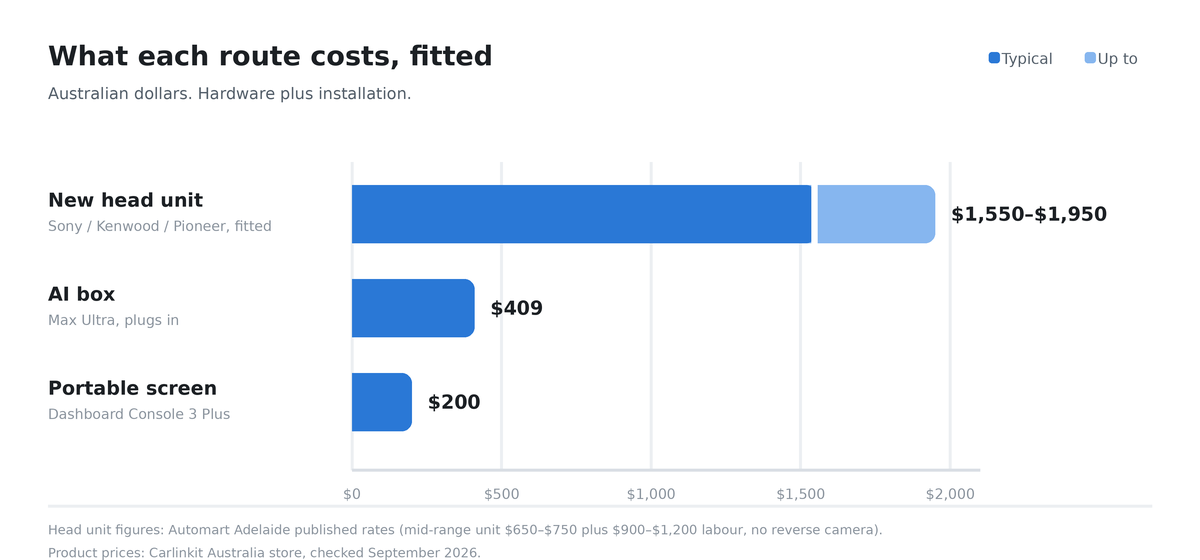
Two things fall out of that table. The first is that the fitted head unit route costs roughly $1,550–$1,950 all in at those published rates, which is three to four times the box. The second is that the box only wins if you qualify for it.
Prices are the current Australian store listings and the workshop’s published rates, checked September 2026. Check the product page before ordering, as pricing changes.
Buying Traps: Fitment, Screen Ratio, Camera and Steering Wheel Signals
Most of the money in a CarPlay radio swap is not spent on the radio. It is spent making it behave like the one that came out. Four things drive that bill, and every one of them is easier to settle before the car goes in than after.
Fitment is model-specific, not size-specific
Single-DIN and double-DIN describe the hole, not the car. You still need a fascia kit cut for your exact model and year, plus a harness that speaks to your car’s wiring. There is no universal version of either, and this is where a “$650 head unit” becomes a longer invoice.
A bigger screen is not automatically a bigger CarPlay
CarPlay renders at whatever resolution the unit hands it. The portable console above is a clean illustration: a 1600 × 600 panel, but CarPlay is capped at 1024 × 600. The same principle applies to aftermarket head units — ask what CarPlay actually renders at, not what the panel measures.
Your reversing camera may or may not come across
If your car has a factory reverse camera, it needs to be made to talk to the new unit. Automart Adelaide quotes $20–$100 for converting an existing factory camera, or around $200 for a new camera including installation. This is a genuine model-by-model question — get it answered in writing before the car goes in.
Steering wheel controls are worth paying to keep
Almost all cars can retain them, but it takes a matching interface module. Leaving it out saves around $80–$120. Do not save it. Losing volume and track control from the wheel is the modification people regret fastest, and retro-fitting it later costs more than including it did.
One more: keep the original unit
Whichever way you go, the factory head unit should end up boxed and labelled, not in a skip. Reinstalling it at sale time is usually the easier conversation with a buyer than explaining a third-party screen — and on a lease or company car it may not be optional.
So, Which One Should You Actually Buy?
Back to the three drivers.
Driver A — factory wired CarPlay, not a BMW or Tesla. Get the box. You keep the factory interface, you keep the resale position, you spend $409.11 once instead of $1,550-plus, and you gain Android apps and split screen that no factory CarPlay system offers. The Max Ultra is the current pick on the Australian store.
See the Max Ultra AI Box on the Australian store — check the compatibility note and current pricing before ordering.
Driver B — no CarPlay at all. A box cannot help you; do not let anyone sell you one. If you are keeping the car for years, a proper CarPlay head unit is worth the install cost, provided you budget for the fascia kit, harness, steering wheel interface and camera work rather than the sticker price alone. If the car is older or the budget is tight, a portable console covers the same daily jobs — navigation, music, calls, reversing — for a fraction of the outlay, without touching the dash.
Driver C — do not touch the dash. Portable console. That is the whole answer. Lease car, company car, or a car you are selling this year: none of those are worth a permanent CarPlay radio install.
Driving a BMW? The generic boxes are ruled out, but there is a BMW-specific AI box built for the iDrive systems — worth looking at instead of a head unit swap on those cars.
Driving a Tesla? Neither of the products above applies, and the Tesla-specific adapter is not currently listed on the Australian store. Your realistic path today is a portable screen, or nothing.
CarPlay Radio FAQ
Can I add CarPlay without replacing my radio?
Often, yes. If your car already has factory wired CarPlay, an AI box plugs straight into it and adds Android apps without touching the dash. If your car has no CarPlay at all, a box will not work and your options are a new head unit or a portable screen.
How much does a CarPlay head unit cost to install in Australia?
Automart Adelaide lists a mid-range Sony, Kenwood or Pioneer unit at $650–$750, with roughly $900–$1,200 for the job itself without a reverse camera. Expect three to five hours in the workshop. Fascia kits, harnesses and interface modules sit inside that figure. Fitment parts vary by model, so ask for the quote in writing.
Will I lose my steering wheel controls?
Usually not. Most vehicles can keep them with the right interface module, and omitting it only saves about $80–$120. That is a poor trade — steering wheel volume and track skip are the functions drivers miss most, and adding the module later costs more than fitting it upfront.
Does an AI box work if my car has no CarPlay at all?
No. The Max Ultra requires the vehicle to be factory-equipped with wired CarPlay or wired Android Auto, and it does not work on wireless-only systems or cars without CarPlay. BMW and Tesla are excluded as well. For those cars, look at a head unit or a portable console.
Is a portable CarPlay screen actually any good?
For what it is, yes. You get wireless CarPlay, a dash cam and a reverse camera for $199.99, with no installation. The trade-offs are real though: it occupies dash space, needs a power lead, and routes audio through AUX or FM rather than a direct connection.
Does replacing the head unit void my new-car warranty?
Not automatically. Under Australian Consumer Law a fault generally has to be connected to the modification before it can be excluded. That said, electrical work is exactly where those arguments happen, so confirm the position with your dealer first if the car is still in warranty.
Will a CarPlay radio hurt my car’s resale value?
It can, if the buyer wanted the factory look. Keep the original head unit, keep the fascia, and refit them before you sell. A car that presents as standard is the easier sale, and it lets you take the aftermarket screen with you.